- The Core Strategy: Modularity & Zoning
- 1. The "Zone Defense" Protocol: Grouping by Function
- 2. The Mechanism: Why Airtight Seals Are Non-Negotiable
- 3. Best Overall: Rubbermaid Brilliance System
- 4. Best Value: Vtopmart Modular Set
- 5. To Decant or Not to Decant?
- 6. System Maintenance & Cleaning
- Frequently Asked Questions
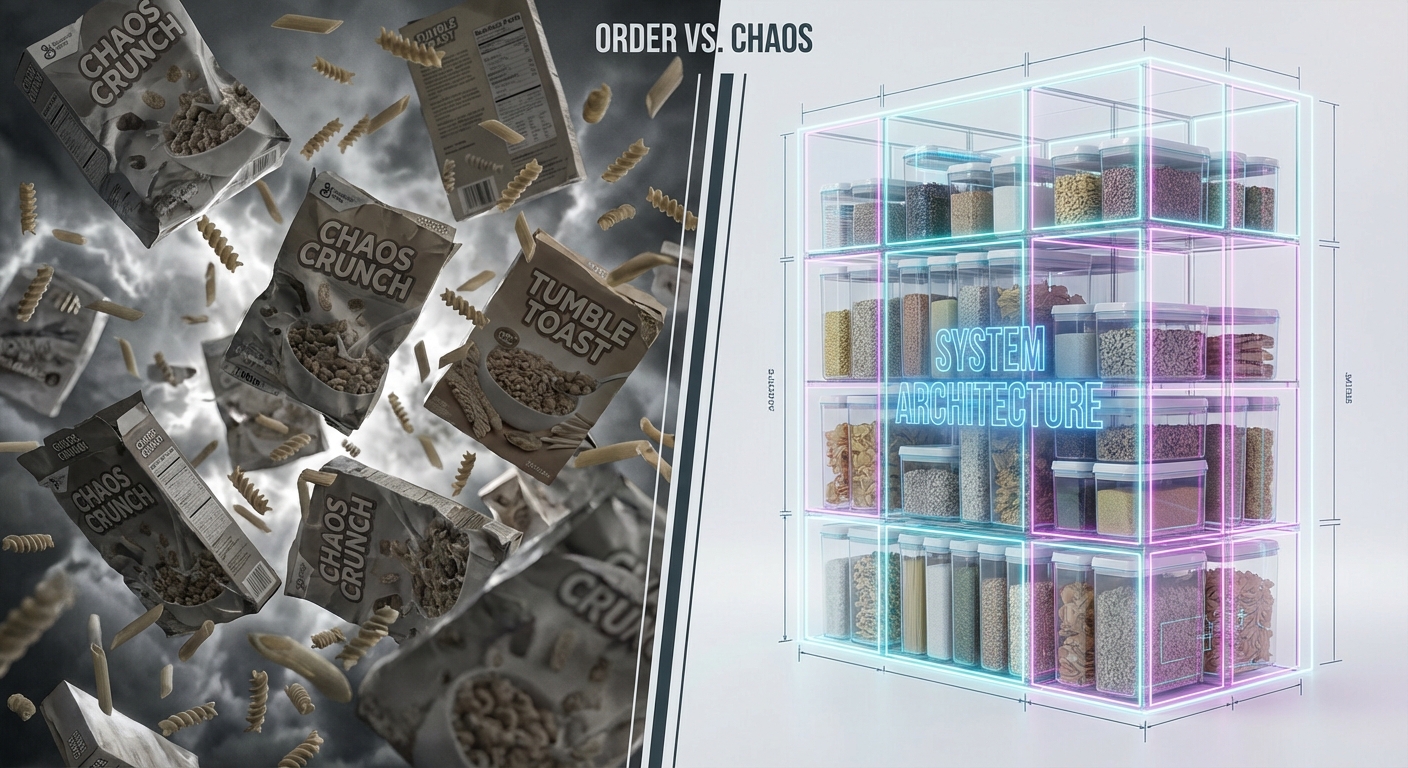
The most effective pantry organization system combines modular, stackable functionality with airtight sealing technology. The best approach is the "Zone Defense" method, which groups items by category (e.g., baking, breakfast, snacks) into clear, uniform containers. Top-rated solutions for 2026 prioritize square footprints to maximize shelf depth and clear visibility to reduce food waste.
1. The "Zone Defense" Protocol: Grouping by Function
Most homeowners make the mistake of organizing by size or color. This looks good on Instagram but fails in practice. A functional pantry must be organized by workflow.
The Mechanism:
Think of your pantry like a grocery store. You don’t find the flour next to the canned beans just because they are the same height. You find flour in the baking aisle. Apply this logic to your shelves. Create specific zones: a "Breakfast Zone" (oats, cereal, syrup), a "Dinner Prep Zone" (rice, pasta, quinoa), and a "Snack Zone" (accessible to kids). This reduces the cognitive load of searching for ingredients.
Visual Consistency:
Using mismatched boxes creates "visual noise." By transferring dry goods into uniform containers, you trick the eye into seeing more space. For those living in tighter quarters, this visual trick is essential for maximizing vertical storage in small spaces.
2. The Mechanism: Why Airtight Seals Are Non-Negotiable
Many cheap containers claim to be "sealed" but lack a silicone gasket. Without this gasket, air exchange continues, leading to two problems: oxidation and pests.
The Science of Spoilage:
Staleness is caused by moisture absorption (in sugar/salt) or moisture loss (in pasta/beans). A true airtight seal halts this process, extending the shelf life of your dry goods by months. According to organization experts at House Beautiful, switching to airtight glass or high-grade plastic containers is the single most effective way to prevent pantry moth infestations.
3. Best Overall: Rubbermaid Brilliance System
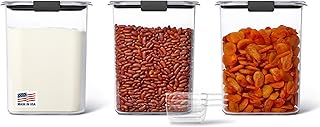
If budget allows, the Rubbermaid Brilliance line is the gold standard. Unlike standard plastic, these are made from Tritan—a crystal-clear, shatterproof material that looks like glass but is lighter and more durable.
Why It Wins:
The lids feature built-in vents for microwave use (though you likely won’t microwave pasta storage, it shows the seal quality) and, crucially, they stack perfectly flat. The latches are robust and provide an audible "snap" that confirms the seal is active. They are also 100% dishwasher safe, unlike many budget options that warp in high heat.
4. Best Value: Vtopmart Modular Set
For a complete pantry overhaul on a budget, the Vtopmart set is the undisputed champion of value. You get high volume and variety without the premium price tag.
The "System" Advantage:
This set comes with 24 pieces, including specific sizes for spaghetti (tall) and nuts/seeds (small). The square shape is efficient—round jars waste the space between them, but square containers utilize every cubic inch of your shelf. It also includes chalkboard labels, which are vital for maintaining your system. If you are just starting your journey, this set covers all kitchen setup essentials in one box.

5. To Decant or Not to Decant?
“Decanting” is the process of pouring food from its original packaging into your new containers. It is controversial because it takes time, but the benefits outweigh the effort.
The Inventory Rule:
Original boxes are opaque. You don’t know you are out of crackers until you reach into the box and find crumbs. Clear containers provide an instant visual inventory. When you glance at your pantry, you know exactly what needs replenishing. This saves money by preventing over-buying.
6. System Maintenance & Cleaning
A system only works if you maintain it. Before transferring any food, wash your new containers thoroughly. Manufacturers often leave chemical residues from the molding process.
Best Practice:
Use a solution of warm water and white vinegar to sterilize the containers without leaving a soapy aftertaste. For a detailed guide on making safe, effective cleaners for your food storage, read our article on cleaning your new containers naturally.
Frequently Asked Questions
Do I really need to label clear containers?
Yes. While you can see the food, many white powders look alike (flour, baking soda, powdered sugar). Labels also prevent other family members from mixing up ingredients or putting items back in the wrong "zone."
How do I organize deep pantry shelves?
Deep shelves are often called "black holes." The solution is to use long, narrow bins that act as drawers. You pull the entire bin out to access items at the back, ensuring nothing gets lost or expires.
Are glass or plastic containers better?
Plastic is better for families with children due to safety and weight. Glass is superior for long-term storage and aesthetics but is heavy and breakable. The products recommended above use BPA-free plastic for the best balance of safety and durability.
What is the best way to store spices?
Spices should be kept in uniform jars, preferably in a drawer or a door-mounted rack. Stacking them on a deep shelf usually leads to chaos. Check Listful’s guide for more specific spice rack configurations.
How often should I reorganize my pantry?
Perform a "mini-audit" once a month. Check for expiration dates and wipe down shelves. A full reorganize should only be necessary once a year if your system is solid.